 Warehouse Design
Apr 202512 min read
How to Choose the Right Pallet Racking System for Your Warehouse
Compare selective, drive-in, push-back & cantilever racking by cost, density & ROI.
Read More

Jagadesh Kumar
Founder & Chief Engineer, AAdithri Solutions
Industrial storage systems are the engineered infrastructure that determines how efficiently a warehouse, factory, or distribution centre uses its available space, throughput capacity, and operational resources. Choosing the right system — and the right manufacturer — is one of the most consequential capital decisions a procurement team will make.
Industrial storage systems encompass all forms of engineered shelving, racking, and space-multiplication infrastructure used to store goods, materials, components, and finished products within industrial and commercial environments. They range from simple modular shelving for workshop consumables to fully automated high-bay storage systems managing tens of thousands of pallet positions.
Unlike standard office or retail furniture, industrial storage systems are structural engineering solutions — they must be designed to specific load capacities, comply with national and international safety standards, and be installed by qualified engineers who can certify the installation. The materials handling equipment (MHE) that operates around and within the system, the building's structural characteristics, and the operational workflow are all interdependent variables that must be accounted for in the design process.
In India, the industrial storage systems market is growing rapidly — driven by GST-led warehouse consolidation, e-commerce expansion, pharmaceutical logistics investment, and manufacturing sector modernisation. The result is a diverse supplier ecosystem ranging from established full-service manufacturers with in-house engineering and fabrication to importers and traders reselling catalogue products. Understanding this distinction is the first step in effective supplier evaluation.
A well-engineered storage system can increase usable pallet positions by 40–200% within the same building footprint — without new construction.
Optimised storage layouts reduce picker travel distances by up to 40%, cut error rates, and dramatically improve order fulfilment throughput.
IS 16046-compliant systems designed, installed, and maintained to engineering standards protect your workforce and limit institutional liability.
"The right industrial storage system isn't an overhead cost — it's a revenue-enabling asset. Every square metre recovered from inefficient storage can be redirected to productive throughput capacity or leased space reduction."
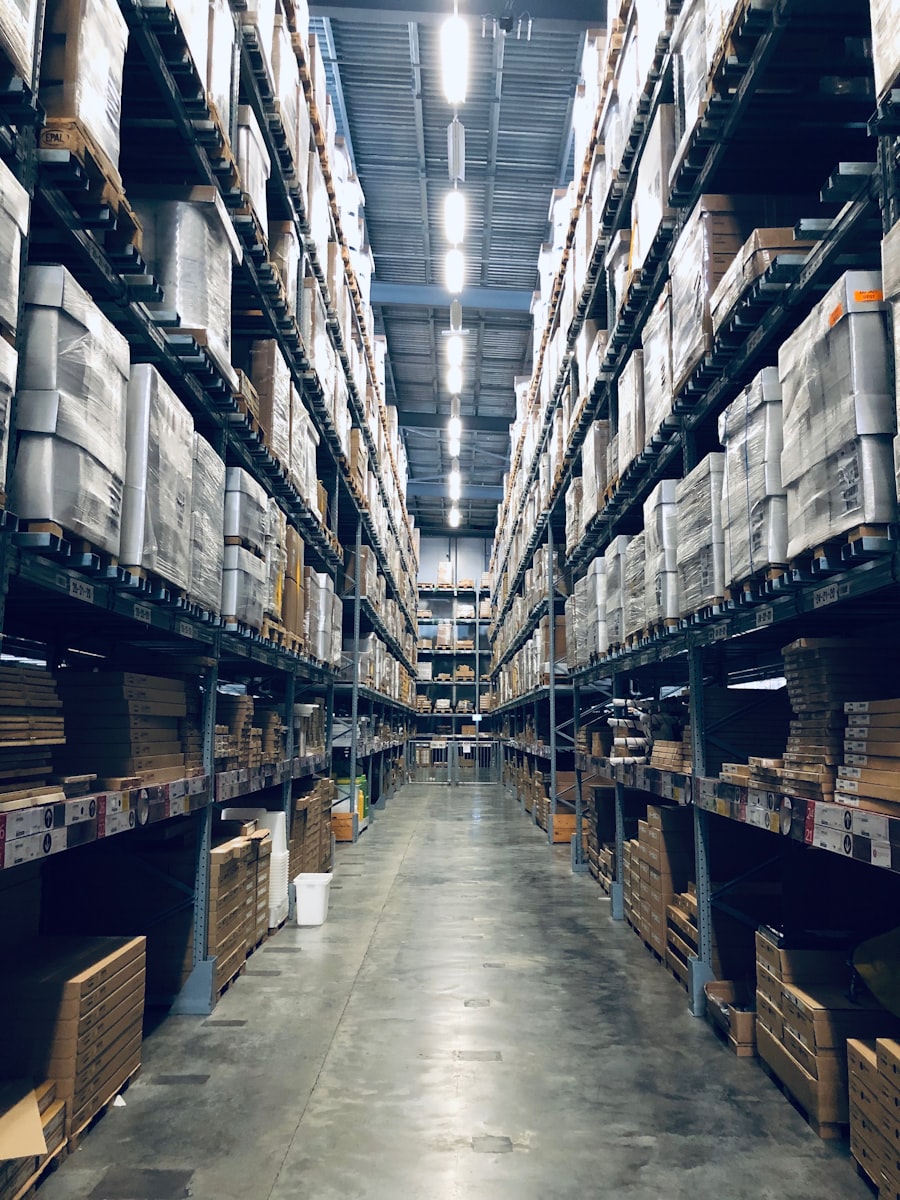
The industrial storage systems category encompasses a wide spectrum of engineered solutions. Each type is optimised for specific goods, operational workflows, space configurations, and throughput patterns. Understanding the fundamental differences is essential before approaching any manufacturer.
Engineered for loads from 500 kg to 5,000 kg per beam level. The backbone of industrial warehousing across logistics, manufacturing, and FMCG.
Load Capacity
Up to 5,000 kg/level
Best For
Logistics, 3PL, manufacturing
Visual benchmarks across storage efficiency, ROI projection, system performance, and storage capacity — helping procurement teams build the quantitative case for investment.
Percentage of available floor area effectively used for storage
Cumulative net return on a ₹45L racking investment vs annual ₹18L operational savings
Multi-dimensional performance score across key warehouse metrics
Relative pallet positions achievable per 1,000 m² (indexed to floor stacking = 100)
Values are illustrative indices based on typical installation parameters.
The industrial storage systems market in India includes hundreds of suppliers ranging from established manufacturers with full engineering capability to importers, traders, and catalogue resellers. Here are the six criteria that separate credible, capable manufacturers from the rest.
In-house structural engineering team with IS 16046 and EN 15512 design capability. Can provide stamped drawings from a registered structural engineer.
Own fabrication plant with certified raw material sourcing, quality-controlled welding, and electrostatic powder coating. Not a trader re-selling imported components.
Completed projects of similar scale and complexity. Verifiable site references across your industry sector. 100+ installations at minimum for any serious manufacturer.
Full-time site engineer overseeing the installation — not just a labour crew. Post-installation inspection report and load notices included as standard.
Spare parts availability, annual inspection service, and modification capability as your business evolves. A manufacturer that disappears after handover is a risk.
Material test certificates, IS compliance documentation, and a documented quality management system. Any ISO 9001-certified manufacturer should be able to provide these on request.
Share your warehouse dimensions, inventory type, and throughput data — we'll provide a free storage system recommendation and layout concept within 48 hours.
Before approaching any manufacturer, gather this information. Having clear answers accelerates the design and quotation process and ensures you receive an accurate, optimised proposal — not a generic catalogue recommendation.
Industrial storage systems serve every major industrial sector in India. Each sector has specific requirements around goods handling, hygiene standards, temperature sensitivity, throughput velocity, and regulatory compliance that directly influence system selection.

Understanding the manufacturing process helps buyers evaluate supplier capability claims, interpret quality documentation, and ask the right questions before placing an order.
CAD and structural analysis using industry-standard software. Every bay, beam, and upright is designed to the specific load, height, and application requirements.
High-tensile steel coil sourced from certified mills with material test certificates. IS 2062 Grade E250 as standard; higher grades for heavy-duty and high-bay applications.
Upright sections and beam profiles are cold-formed on calibrated roll forming lines. Critical dimensions are held to ±0.5mm tolerance for proper fit-up during installation.
100% dimensional inspection of critical components. Load testing of sample beams from each production batch. Material certificates cross-referenced against incoming stock.
Shot blast cleaning followed by electrostatic powder coating or hot-dip galvanising as specified. Standard colours: light grey RAL 7035 uprights, orange RAL 2004 beams.
Site-specific installation drawings issued before commencement. Installation supervised by a qualified engineer. Floor anchoring, load notices, and handover inspection included.
Industrial storage system costs vary by an order of magnitude depending on system type, scale, and complexity. Understanding the cost drivers helps procurement teams build accurate budgets and evaluate quotations on a like-for-like basis.
₹800–₹2,500
per bay
₹3,500–₹6,000
per pallet position
₹6,000–₹12,000
per pallet position
₹1,200–₹2,500
per sq ft
₹18,000–₹35,000
per pallet position
Project Specific
full system quote
| Cost Factor | Impact | Key Consideration |
|---|---|---|
| System Type | High | Selective racking is the lowest cost per position; automated systems are 5–10× more expensive. System type is the biggest single cost driver. |
| Steel Grade & Section Size | Medium | Higher load requirements need heavier steel sections. Heavy-duty systems use 30–50% more steel per bay than standard systems. |
| Rack Height | Medium | Higher rack heights require heavier upright sections and more complex engineering. Installations over 8m incur a significant structural cost premium. |
| Floor Preparation | Variable | Poor floor flatness, inadequate slab capacity, or existing services may require remediation work before racking can be installed. |
| Surface Finish | Low–Medium | Standard powder coat is most economical. Stainless steel components for food/pharma environments add 40–80% to component cost. |
| Installation Complexity | Medium | Sites with limited access, working-around-live-operations constraints, or multi-shift installation requirements increase labour and supervision costs. |
The industrial storage systems sector is evolving rapidly. Organisations making storage investments in 2026 need to consider not just today's requirements but the direction the industry is moving — to ensure the infrastructure they commission remains relevant and adaptable.
Automated storage and retrieval systems are moving from large-scale greenfield facilities to retrofit projects of 2,000–5,000 pallet positions — a scale now achievable for mid-size operations.
Weight sensors on beam levels feed real-time inventory data directly to WMS platforms — eliminating the need for manual cycle counts and providing live stock visibility.
Low-carbon steel, recyclable powder coatings, and circular design principles are becoming procurement requirements for large corporates and ESG-reporting businesses.
Snap-fit and tool-free modular systems are enabling operations to reconfigure storage layouts overnight as product ranges and fulfilment models evolve at pace.
Storage systems designed from the ground up for autonomous guided vehicle navigation — with precision floor tolerances, defined lane widths, and sensor-compatible upright profiles.

AAdithri Solutions is a full-service industrial storage system manufacturer and installer based in Hyderabad, with project delivery capability across India. Here's what makes the difference for procurement teams evaluating storage partners.
Full structural design capability under one roof. Every project receives stamped drawings from our registered engineers — not generic catalogues.
We fabricate what we install. Our plant produces all structural components to tight tolerances with certified steel and full quality documentation.
From 200 m² workshop fit-outs to 50,000 m² distribution centre racking — 15+ years across manufacturing, logistics, pharma, automotive, and FMCG.
Dedicated installation crews operating across all major industrial corridors — Hyderabad, Pune, Chennai, Bangalore, Mumbai, Delhi NCR, and beyond.
All racking systems are designed and installed to Bureau of Indian Standards IS 16046 requirements, with load notices issued for every bay.
Every installation is backed by a 12-month structural warranty with dedicated after-sales support for inspections, modifications, and spare components.
IS 16046 Certified
Bureau of Indian Standards
500+ Installations
Across 6+ industries
Pan India Delivery
All major corridors
12-Month Warranty
Structural guarantee
Answers to the most common questions from warehouse managers, procurement heads, and facility planners evaluating industrial storage system manufacturers in India.
Our engineers will analyse your warehouse, inventory profile, and operational requirements — then design the most efficient storage solution for your specific needs.